History of Workers Compensation Law in Ontario
Prior to 1885:
Prior to 1885, workers when injured or made ill by their employers workplace were forced to sue their employer. In the majority of cases the injured worker, on in the case of a fatality the injured worker’s family, they lost!
In fact, according to a research study conducted by Eric Tucker of Osgoode Hall law School, less than 15% of injured workers were successful suing their employers in court. The reason for this very low success rate was because employers would make full use one of three legal defences, which were nicknamed the “unholy trinity.”
Contributory Negligence:
This is where the employer would plead that the worker somehow contributed to their work injury or exposure. Thus, ensuring employers would be able to escape any legal responsibility for their dangerous workplaces that caused the injuries to their workers. This defence goes back to 1809.
Fellow Servant:
This is where the employer would claim that the work injuries were caused not by the employer but by a fellow co-worker. The injured worker or their family would then be required to prove that the employer directly caused the work accident and subsequent injuries. As very few employers were actually involved in the workplace, making it impossible for injured workers to be successful. This defence originated from the case of Priestley v. Fowler in 1837.
Assumption of Risk:
This is where the employer would claim that the worker ought to have known the risks of the work and as such the employer should not be held responsible.
Don’t sink the Bismarck:
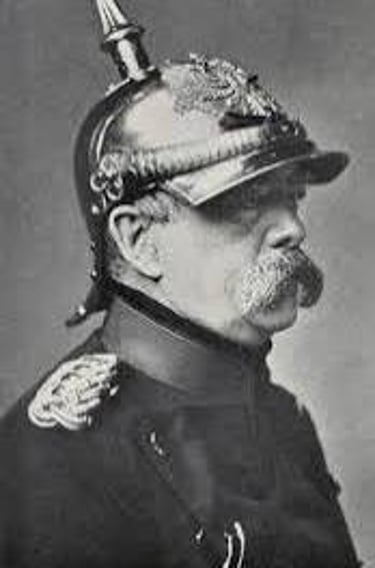
One of the first countries to develop any form of compensation for workers when they have been injured or made ill by their employer’s workplace, was Germany. In the early 1880’s the German Chancellor Otto Van Bismarck created the first workers compensation system. A system that was similar to modern day workers compensation systems. It was a system that had was set up to compensate workers injured or made ill by their employer’s workplaces and it was administer by the government. However, unlike modern days systems, it was funded by employers and workers.
Britain’s Answer to the Unholy Trinity:
In 1880, Britain responded to employers abusing the use of the Unholy Trinity with the passing of the Employers’ Liability Act in 1880. This law was nothing like Germany’s law, as it only prevented employers from using one of the three defences to avoid any legal responsibility. Eventually, Ontario would begrudgingly follow along the same lines as Britain.
Passing of the Workmen's Compensation for Injuries Act of Ontario:
In about 1885 a munition plant in Hamilton Ontario blew up killing five workers. Their families, like all families of workers before them, were left penniless. This created great public outrage. Eventually the Liberal government in power at the time passed a law banning the use of the three defences commonly used by employers. The law was never really a workers compensation law by its name sake, but really was an employer liability law by limiting employers use of the common law defences.
Britain adopts a real compensation law:
That in about 1897, Britain then adopted a workers compensation law, which provided compensation to workers based on the no-fault model.
Push for better:
In about 1900 a Professor Moor of the University of Toronto wrote the Ontario Legislature. Professor Moor pointed out to legislatures that while close to 50% of workers who were injured or made ill by their employer’s workplace were now successful in court, the remaining 50% were not. These injured workers and their families were still limited by cost of litigation, time limits, and the impossible task of proving the liability to the employer. It is also important to note that many employers had realized that while many workers many were not successful, the ones that were could effectively bankrupt an employer.
Appointment of Sir William Meredith:
It would take another ten years before the then Conservative Premier of Ontario, Whitney would appoint the then Chief Justice of Ontario, Sir William Ralph Meredith to investigate what to do with workers injured, made ill, or killed by their employer’s workplace. This was something never done before, to fully investigate what is clearly a global issue. Meredith traveled across Canada, and the world over, to learn how others managed, or not, the issue of workers injured, made ill, or killed by their employer’s workplace. Meredith also conduct hearings to hear from employers and workers. Meredith then wrote three reports to the Ontario Legislature. The first encapsulated the views, opinions, and concerns of workers and employers; the second report provided a draft bill, and the third provided a final report providing the guiding principles of the workers compensation system. Principals which have bene lost in today’s laws.
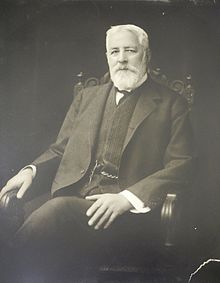
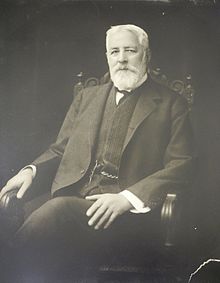
Sir William Ralph Meredith
Chancellor Otto Van Bismarck